| Property | Capacitor | Inductor |
| Can't change instantaneously: | v | i |
| fully charged | i=0, v=V
looks like open circuit to DC |
v=0, i=V/R
looks like short circuit to DC |
| fully discharged | v=0, i=V/R
looks like short circuit to DC |
i=0, v=V
looks like open circuit to DC |
| time constant | T=RC | T=L/R |
|
VOLTAGE
Charging Curve
CURRENT
|
Vfinal=V; Vo=0 Io=V/R |
Vo=V Ifinal=V/R; Vo=0 |
|
VOLTAGE
Discharging curve
CURRENT
|
Vo=V Io=-V/R |
Vo=-IR Io=I |
| Property | Capacitor | Inductor |
| Basic Formula | Q=CV, C=Q/V, V=Q/C
i=C(dv/dt) |
v=L(di/dt) |
| Energy Stored | W=0.5CV^2 | W=0.5LI^2 |
| physical | C= kA/d | L=kAN^2/L |
| Series combination | 1/Ct = 1/C1 + 1/C2 + 1/C3 +... | Lt=L1 + L2 + L3 +... |
| Parallel combination | Ct = C1 + C2 + C3 + ... | 1/Lt=1/L1 + 1/L2 + 1/L3 +... |
| Reactance (AC) | Xc=1/(2*pi*f*C) | Xl=2*pi*f*L |
| Reactive Power: Pr=VrmsIrms | Pr=V^2/Xc = I^2 Xc | Pr=V^2/Xl = I^2 Xl |
Universal Curves:
|
|
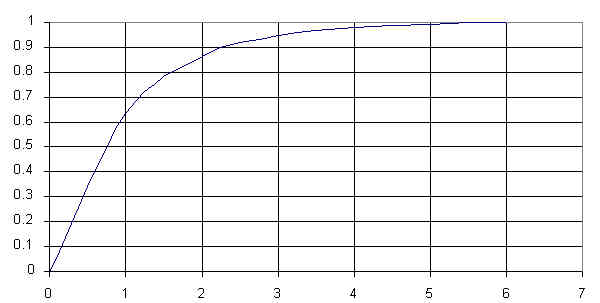
v=V(1-e^(-t/T))
starts at zero, ends at positive value |
||
| number of time constants (T) | % of final value | ||
| 0 | 0% | ||
| 1 | 63% | ||
| 2 | 86% | ||
| 3 | 95% | ||
| 4 | 98% | ||
| 5 | 99% (considered 100%) | ||
|
|
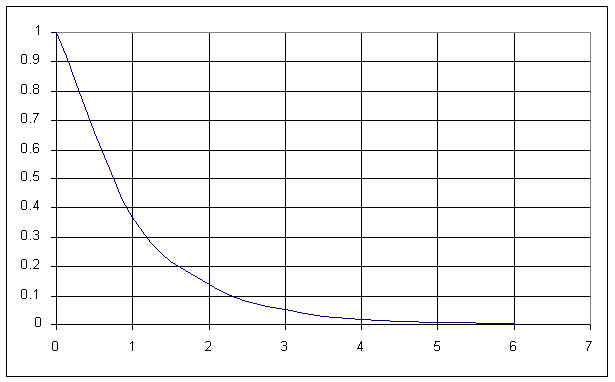
v=Ve^(-t/T)
starts at a positive value; ends at zero; |
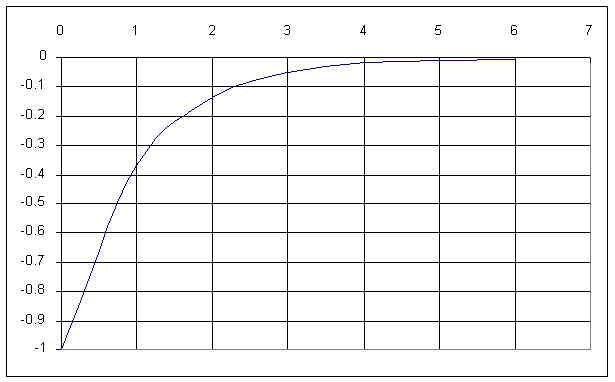
v= -Ve^(-t/T)
starts at a negative value; ends at zero; |
|
| number of time constants (T) | % of initial value | ||
| 0 | 100% | ||
| 1 | 37% | ||
| 2 | 14% | ||
| 3 | 5% | ||
| 4 | 2% | ||
| 5 | 1% (considered zero) | ||